KinderGals

Search This Blog

Monday, July 10, 2017

4 Ways to Write With Kids (Day 1 in Vegas at I Teach K!)

 There are many ways to write with kids! Depending on your goals and the amount of time, you can pick the type of writing that is a perfect fit! This blog post will share the 4 different ways we write with our kids!
Modeled Writing
One way to write with kids is Modeled Writing. In Modeled Writing, the teacher is doing all of the thinking and all of the writing.  This fits perfect if you want to share some new content with the children.  On this anchor chart, we were introducing the basic 2D shapes. Each day as we introduced the new shape, we quickly added it to the anchor chart.  We were doing all of the thinking and all of the writing! While shapes is the math standard, we also add a language arts standard to our lessons. We ask ourselves, do we want our focus to be on words begin with a sound, we can say words slowly and stretch them out, or some words have a silent letter at the end? Then, as we are writing the words, we share our thinking out loud as we write the words. We tend to lose focus! By writing the standard on our plans, we keep to one thing instead of jumping between print concepts leading to confusion.
Shared Writing
Another way to write with kids is Shared Writing. In Shared Writing, the teacher still has control of the pen, but the kids are helping to construct the text. This type of writing is a great way to review. It provides a structure for the teacher to check for understanding of newly learned concepts. In this lesson, we were reviewing what we knew about patterns.  The children were sharing their thinking and I was recording it on the chart.  Once again, we want to be sure and focus our language arts standard. We can decided if we want to work on spaces between words, sentences start with a capital letter, sentences end with a period, or some words we can write quickly (sight words).
Interactive Writing
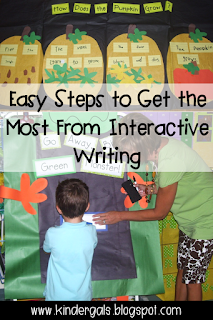
Interactive Writing is probably the most misunderstood type of writing. In Interactive Writing the teacher shares the pen AND the thinking. "Shares" is the most important word! This doesn't mean that you give the kid the pen and let them do all of the writing. Instead, after determining your literacy focus, share the pen for that part of the writing.  For example, if you are working on beginning sounds, the kids would only help you write the beginning letter. The teacher fills in the rest of the word-thus sharing the pen.
Independent Writing
During Independent Writing, the kids are totally in the driver's seat. They are responsible for ALL of the thinking and ALL of the writing. This type of writing occurs in many different ways in our classrooms.  The children write in journals, during writer's workshop, in centers, during math, and for Science and Social Studies.  This is a great way to examine where children are as writers. What kinds of things are they doing independently? How can we use that information to help us plan modeled, shared, or interactive writing experiences?
Here are a few other blog posts about interactive writing if you are looking for more!
http://kindergals.blogspot.com/2014/10/peek-at-my-week-week-12-apples-and.html
Or in this blog post.
http://kindergals.blogspot.com/2012/04/house-for-hermit-crab.html
This is some of the information that I am sharing today in Vegas during my Ready, Set, Interact! session. 
https://www.teacherspayteachers.com/Product/Morning-Meeting-Pack-It-Learn-It-by-Kim-Adsit-750309
https://www.teacherspayteachers.com/Product/Writers-Workshop-Building-Writers-by-Kim-Adsit-aligned-with-Common-Core-1306556
I am doing a few other sessions today as well.  I am doing a session on Math Manipulatives. You can find some of those ideas in these blog posts.
http://kindergals.blogspot.com/2016/09/easy-ways-to-use-pattern-blocks-to.html
http://kindergals.blogspot.com/2016/10/making-most-of-unifix-cubes.html
http://kindergals.blogspot.com/2017/01/making-most-of-your-math-manipulatives.html
http://kindergals.blogspot.com/2017/06/using-counting-bears-to-teach-all-math.html
Here are the resources I used to plan this session.
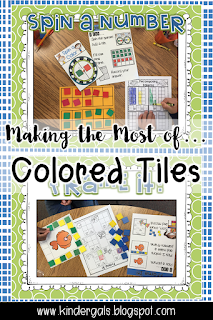
https://www.teacherspayteachers.com/Product/Colored-Tiles-Unit-3-by-Kim-Adsit-and-Michele-Scannell-2937047
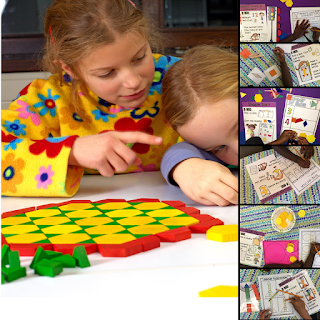
https://www.teacherspayteachers.com/Product/Pattern-Blocks-Math-Activities-by-Kim-Adsit-and-Michele-Scannell-2759456
https://www.teacherspayteachers.com/Product/Counting-Bears-by-Kim-Adsit-and-Michele-Scannell-3207980
https://www.teacherspayteachers.com/Product/Linking-Cubes-Math-Activities-Unit-2-by-Kim-Adsit-and-Michele-Scannell-v22-2830670
https://www.teacherspayteachers.com/Product/Dominoes-Domino-Games-Fun-Games-to-Teach-Number-122807
https://www.teacherspayteachers.com/Product/Card-Games-to-Teach-Number-100924 
 My other session today was "DI: For the Little Guy." You can read more about some of those ideas in this blog post.
http://kindergals.blogspot.com/2015/07/day-5-di-for-little-guy.html
In this session, I shared some of the forms I use to make differentiation a little easier. You can grab them below as a free download. 
Pin It!

Sunday, June 18, 2017

Using Counting Bears to Teach ALL Math Standards

Are your math manipulatives gathering dust, sitting on a shelf? Do you want to be able to engage your students in fun, meaningful activities that will allow them to expand their mathematical thinking and grow in confidence as mathematicians? This blog post shares our favorite ways to use counting bears to teach ALL of the math standards.
We wanted activities that our kids could do independently with the counting bears. We started with a mini lesson. The minilessons help our kids gain independence through scaffolding. The mini lessons follow this format: demonstrate (I do), students to try it on their own with our support (We do) and try it on their own (You do). By providing this scaffold for our kids, they gain the support they need in order to be more successful when they are working independently. After you teach the lessons and you feel your students are ready to work independently, place all the materials, the “I can” chart, and the recording sheets with the counting bears.
Here is one of our favorite counting bear activities for teaching the measurement standards.
Collect several clip art images of things they are great for measuring length....pencil, key, marker, etc.
Invite kids to measure two different images using the bears.
Count how many bears it takes to measure each item.
Compare.
Recording pages are always optional. I usually use them for "have to" centers, but not for "can do" centers. 
On the recording page, the kids write the numeral to represent how many bears it took to measure each item.
Then, they circle which item is longer or shorter.
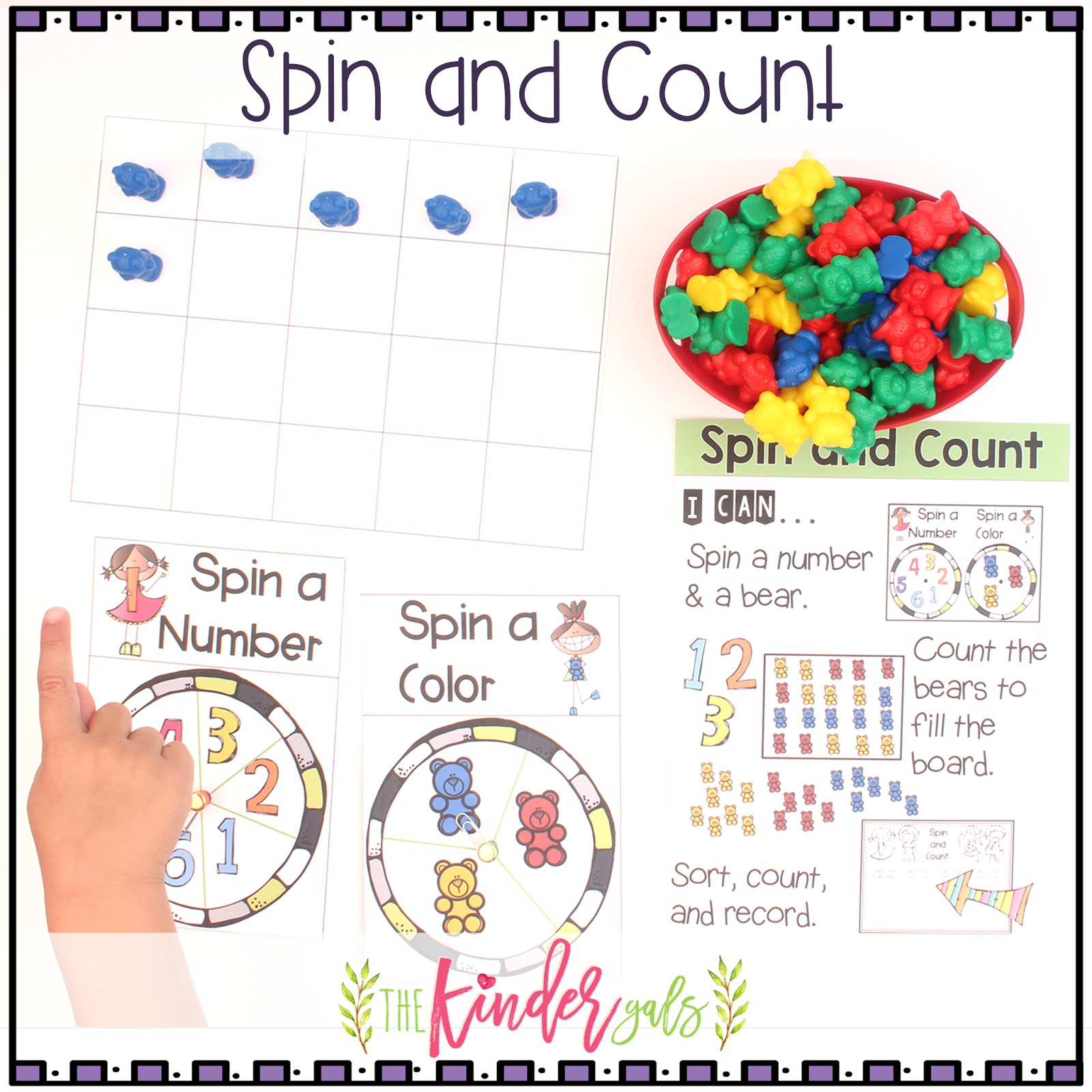
Here is one of our favorite counting bear activities for teaching the counting standards.
Invite the children to spin the numeral spinner and the color spinner.
Count the number/color of bears to match the spinners.
Put the bears on the grid.
Spin again. Continue to spin until the grid is full.
Once the grid is full, invite the children to sort and count the bears.
Record the number of each color of bear on the grid.
Here is one of our favorite counting bear activities for teaching the shapes standards.
Invite the children to spin the spinner.
Select a counting bear to cover that shape on the game board.
Spin again.
Continue to spin until the game board is full!
Here is one of our favorite counting bear activities for teaching the addition & subtraction  standards.
Invite the children to select a cards (1-5).
Count bears to match the numeral, and place them on the fives frame.
Use a second color of bear to fill in the remaining squares.
The children color the fives frame on the recording page to match the bears on the fives frame.
Record the number sentence.
You can also play this game on a tens frame.
Here is one of our favorite counting bear activities for teaching the composing and decomposing standards.
Give the child a double tens frame.
Invite them to put 10 bears, one color, to fill up the first tens frame.
Now, grab a handful of a different color of bear.
Add those bears to the second tens frame.
Color the tens frames on the record sheet and decompose the number!
Here is one of our favorite counting bear activities for teaching the data standards.
Invite the children to make a pattern using the counting bears. (Cut the strips long enough so that there won't be more bears than can fit on the graph!)
Once the pattern is made, move the bears to the graph.
Record the graph on the recording paper.
Analyze the data.
Simple is Best!
We made these games SIMPLE! We want our kids to be able to play these activities totally by themselves! You might have noticed that the games are similar to some of the ones in our pattern blocks, linking cubes, and colored tiles units. We change the manipulative and play the same or similar games! This makes kids very independent and successful! 
These activities are a sample of the activities in the Counting Bears Unit.
https://www.teacherspayteachers.com/Product/Teddy-Bears-by-Kim-Adsit-and-Michele-Scannell-3207980

You can watch a video preview of all of the activities from this unit here.
 
Pin It!

Wednesday, June 14, 2017

Literacy Games for the WHOLE Year and A FREE Game

Games are wonderful! Not only are they highly engaging, research shows that playing games actually grows brain power! But, let's get real...sometimes we spend so much time teaching children HOW to play a game, that not much time is left to master the intended standard.  That's when I developed the idea of my "go to" games.  I have a handful of games that I teach the kids. Then, I just change the clip art, change the standard and...just like that a whole new game! Here are some of my favorite "go to" games for literacy.
My kids love "Roll, Say, Keep". It becomes a class favorite.  Here's how you play:
  • Make a game board with six boxes. In each box, put one of the faces of the dice.
  • Make a set of cards that can fit in the boxes.
  • Invite the children to put a card in each box.
  • Roll the dice.
  • If the dice lands on five dots, the children find the card that is in the box with the matching dice face.
  • They read the word, and move the card to the right side of the game board.
  • Add another new card to the empty box.
  • Keep playing until all of the cards have been moved to the right side.
Now that they know how to play, I can use this same game all year. I can use it for letters, words, numerals, shapes...you name it! If you can put it on a card...you can teach it with Roll, Say, Keep! Be sure and scroll to the bottom where you can snag a FREE ABC Back to School Roll, Say, Keep Game.
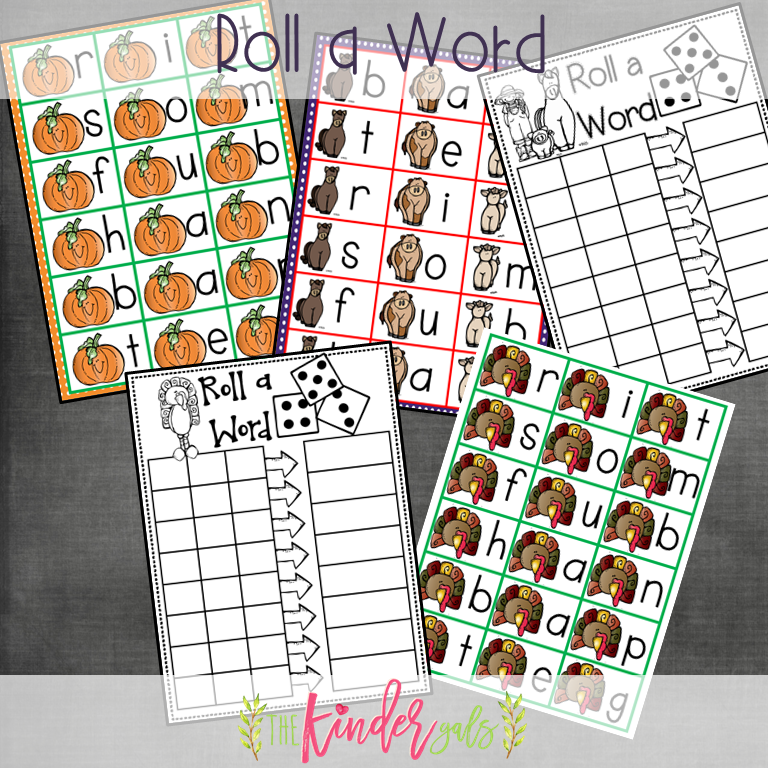
Another easy game is called "Roll a Word". This is great practice for blending cvc words! *** You can also make this a long vowel game by making the game board have 4 columns instead of 3!
Here's how you play:
  • Make a game board with 3 columns/6 rows.
  • Put a clip art image and a letter in each box--consonants in the first and third columns and vowels in the middle column.
  • Give each child 3 game pieces, I used unifix cubes.
  • Invite the child to roll a dice.
  • Move the first game piece (unifix cube) up the first column the number indicated on the dice.
  • Repeat for columns 2 and 3.
  • The children write the letters on the recording page, and then write all 3 letters together to make the word.
  • Be sure you have the children read the words when they are done!
See how easy it is to play this game all year? Great practice for blending and segmenting cvc words!

Another class favorite for building cvc words is "Spin a Word".  Here's how you play this game:
  • Create a game board with a spinner. Put a vowel in each section on the spinner.
  • Create a second game board for consonants. Select 5 consonants that occur most often in cvc words.
  • Invite the children to spin the consonant spinner.  Find a "tree pot" with the letter where the spinner landed and add it to the first tree.
  • Spin the vowel spinner, add a "tree pot" with the vowel to the second tree.
  • Spin the consonant spinner again, add a "tree pot" with the consonant to the third tree.
  • Invite the children to write the word on the recording sheet.
  • Remove the "tree pot" letters and repeat to make more words.
When first introducing any of these "go to" games, I play them in large group. Then, we play again, as I pull them for small groups.  When I can just "watch" as the children play, the game is ready to be a center. So the first few times we play, they play with supervision. This is why I love to play the same games, just changing the theme of the game! Once the know how to do it, I can concentrate on my small group and they can work on the skills independently!
This is a great large group game. Here's how you play SWAT!:
  • Make a deck of cards. They can be words, letters, pictures, etc!
  • Make two fly swatters with a picture to match the theme of the game.  In this game, the farmer is on the fly swatter and the animals are on the cards.
  • Spread the cards on the floor.
  • Show the children the letter, word, etc. that you want them to look for.
  • Two children have the fly swatters.
  • They look at the cards laying on the ground.
  • When they find the letter, word, etc. on the card, the farmer SWATs the animal.
  • I tell the kids the farmer is catching his animals!
Here are a few other versions of the same game!
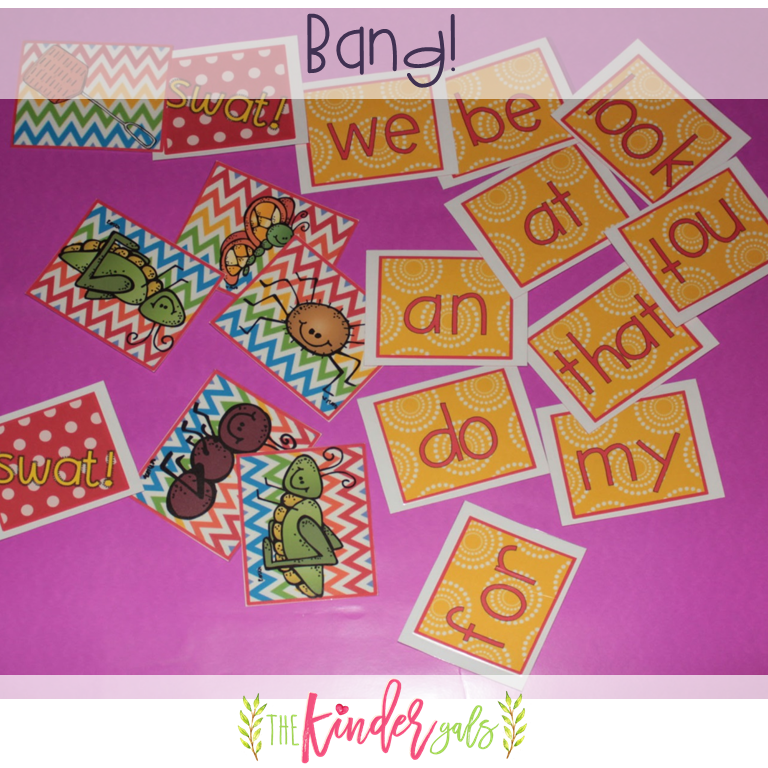
Here is another game, Bang!, that is perfect for large group times! Here's how you play:
  • Make a deck of cards with letters, words, etc. 
  • On a few card write the "gotcha" word. In this game it is, SWAT!
  • Put the cards in a container. I used a bug box from the Dollar Tree for this one!
  • Pass the container around the room.
  • Invite each child to draw a card from the container.
  • They read the letter, word, etc. on the card.
  • If they don't know, they can ask a friend.
  • We put the cards in the center of our circle as we read them.
  • When someone pulls out the SWAT card, all of the cards go back in the bug box.
  • Begin again and play for as long as you like!
Here are some versions of the same game. When they pull out a card with a picture, it could be that you ask them to tell you a rhyming word. Or, they might have to tell you the beginning sound. Or, it might just be language and they are just naming the pictures.
There are many skills that we teach for a few weeks, the kids master it, and we move on to the next skill. Syllable sorting is one of those skills.  However, it also easily forgotten! I use syllable sorting as a center quite frequently. The kids just sort the pictures according to how many syllables.
As the year progresses, you can invite the children to stretch out the sounds as they record the words in each column.
I love how easy this game is! The kids catch on easily and do not require much assistance!
https://www.teacherspayteachers.com/Product/Literacy-Games-Mega-Bundle-LIMITED-TIME-3201799
Here is a bundle of all of the Literacy Game Packs.  Not every game is in every pack, but the games are repeated throughout the year. For two days, and two days only, this bundle is GREATLY reduced!  This is a better bargain than you will get  with a tpt site wide sale!


Pin It!
 
Pin It button on image hover

Receive All Free Updates Via Facebook.