With all the focus on testing and limited budgets, field trips have been eliminated or greatly reduced in many schools. So how can we “take” field trips and not leave the school property? Here are a few things we have done:

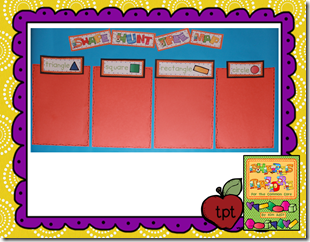
One idea Marcia suggests is one that we have already done! We took a shape walk around the school to find shapes all around us. We then went back to the classroom and made a tree map of what we saw.

Marcia also suggests taking your class outside under a tree to conduct a lesson. During our insect unit, we took our magnifying glasses and our books and headed outside. We laid in the grass to see what we could find. Then we recorded what we saw in our books.

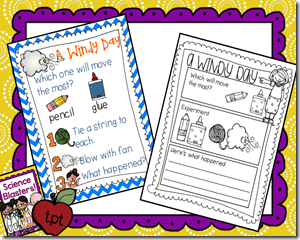
On another day, a windy day, we headed outside to see what wind would do. Before going outside we predicted which one we thought would move the most. Then, we did our experiment and recorded our results. I love these simple direction cards for our science experiments. It is a great way to put nonfiction text to work!

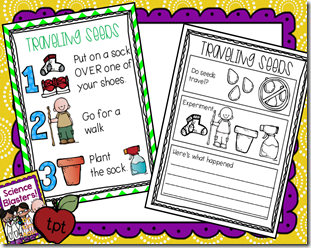
On another spring day, we put an old sock on over our shoes and headed out for a walk. We walked all through the tall grass to see if we could collect any seeds on our socks. We planted our socks in one gallon containers to see if anything would grow!


One of our favorite events is Whale Day sponsored by our ecology club. The sponsors and kids set everything up and each grade level is assigned a time to do the events. We did rubbings of whales. They made a life sized whale using rolls of black plastic.


We played a predator/prey game to show children how a balance is important.


We put our hands down inside ziploc bags, one made with crisco between two ziploc bags and one without, that were inside buckets of ice. This was to show the kids how the blubber keeps the whales warm. We played a game where children drew a whales tale and then we tried to match them with the one they copied. This is because we can identify whales from the markings on their tails.

We had film cans with various items. For example, there were 4 cans with pennies, and 4 cans with beans, etc. The kids had to shake the cans and hook arms with the whales that were in their families. Whales can locate their family members by the sounds they make!
So why is this all important:
“Because students need concrete, real world examples and need to see, touch, and experience the world, a field trip can be a useful teaching tool prior to starting a teaching unit.” (Gregory & Parry, 2006)
and…
“Enhancing higher order thinking skills, refining observation and questioning skills, and increasing the confidence and attitude of students are all benefits of field trips.”
One thing I want to try:
Marcia suggest planning a scavenger hunt so that when students are on the field trip they are looking for predetermined items and finding the answers to predetermined questions. I am thinking this would be kind of like our “back to school” scavenger hunt, but I think we could do WAY more with this idea!!
Click on the image to see what others are saying about field trips!